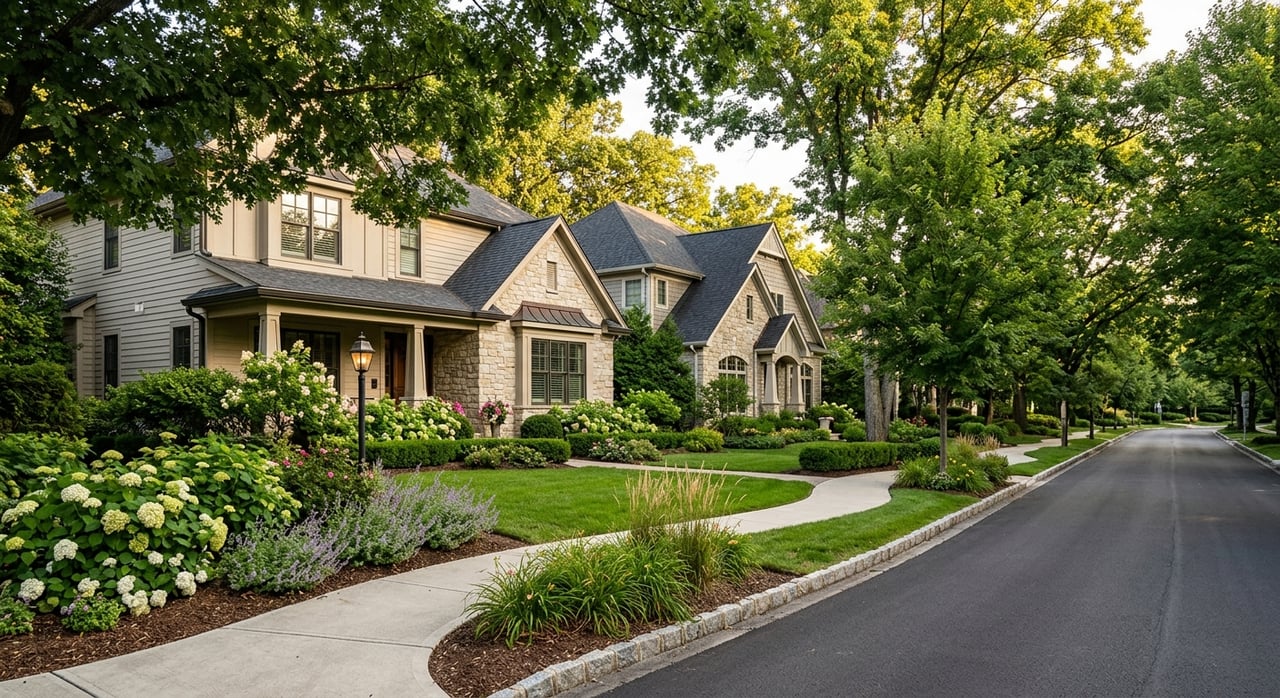
Strongsville HOA Communities Guide for Planned Neighborhoods
June 11, 2026
June 11, 2026
Wondering whether a Strongsville HOA community is a smart fit for your lifestyle? You are not alone. Many buyers like the idea of shared amenities and maintained common spaces, but they also want to know what the rules, fees, and day-to-day expectations really look like before they commit. This guide will help you understand how planned communities work in Strongsville, what documents to review, and how to decide if a specific neighborhood fits the way you want to live. Let’s dive in.
Strongsville has a lot of neighborhoods that feel organized, amenity-focused, and visually consistent for a reason. The city’s cluster-development rules are designed to preserve natural features, provide open space and recreation, separate pedestrian and vehicle circulation, and keep improvements functional and serviceable.
Those local rules also shape how communities are built. Strongsville requires at least 25 contiguous acres for cluster development, 20% common open space, a cap of 35% cluster dwellings, and two enclosed parking spaces per unit. When you see neighborhoods with shared green space, coordinated design, and common amenities, that structure often starts with city planning, not just the HOA.
Strongsville also routes cluster subdivisions through the Architectural Review Board. City materials show that submittals can include site plans, unit elevations, landscaping plans, lighting plans, and mailbox plans. That matters because it tells you exterior appearance and design standards may be built into the community from the beginning.
Under Ohio law, a planned community is generally a group of individual lots tied together by recorded documents that require owners to belong to an HOA, share property or facilities, or support those shared elements through fees. The association must be a nonprofit corporation, the board is elected by owners, and the declaration and bylaws must be recorded.
Condominiums are treated differently and are excluded from this definition. So if you are comparing a Strongsville single-family HOA neighborhood to a condo development, the legal framework is not exactly the same.
In an Ohio planned community, the association generally handles maintenance, repair, and replacement of common elements unless the declaration says otherwise. Each owner is usually responsible for the lot and its improvements, including the dwelling and utility lines serving it.
The board may enforce the declaration, bylaws, covenants, conditions, restrictions, and rules. It may also adopt rules about the maintenance, repair, replacement, modification, and appearance of common elements, collect assessments and other charges, and suspend voting privileges and recreational-facility use if an owner is more than 30 days delinquent.
In plain language, that usually means you are trading some flexibility for more coordination. You may get shared amenities and a more consistent look across the neighborhood, but you also need to stay current on dues and follow community rules.
HOA fees are not one-size-fits-all in Strongsville. Ohio law allows associations to levy and collect assessments, fees for the use or operation of common elements or services provided to owners, and reasonable charges for preparing or copying governing documents, amendments, resale-related documents, or statements of unpaid assessments.
That means your costs may include regular dues and, in some cases, occasional document or amenity-related charges. The exact structure depends on the community’s governing documents and operations.
Local examples show how much HOA setups can vary. High Point currently posts 2026 annual dues of $590, while Waterford Crossing posts 2026 annual assessments of $725. Those are useful examples, but they are community-specific figures, not a marketwide standard.
One of the biggest reasons buyers consider HOA neighborhoods is access to amenities. In Strongsville, that can range from simple common spaces to larger recreation-focused setups.
Waterford Crossing describes itself as a planned recreation community with 656 homes, a private clubhouse, swimming pool, playground, lighted twin tennis courts, a sand-volleyball court, and a 1.2-mile parkway. High Point describes itself as a planned recreation community of 643 single-family homes and detached cluster units. Westwood Farms says pool access is controlled by a key-fob system.
Other local communities show how use rules can shape daily life. Deerfield Woods posts pool hours, requires annual pool-pass registration, gives homeowners paid-in-full access to a multi-purpose field, and limits pond use to common-area access. Meadowood’s rules state that privileges are unavailable unless assessments are paid in full, and they include guest limits and conduct rules for the recreational campus.
When buyers hear “HOA rules,” they often think only about paint colors or lawn care. In Strongsville planned communities, the rules can also affect how you use amenities, when guests can visit, and what approvals you may need for exterior changes.
That is especially important in neighborhoods with architectural review standards or shared infrastructure. Based on Ohio law and local community examples, a community may regulate amenity access, guest counts, clubhouse use, common-area access, and architectural control.
If you value predictability and coordinated upkeep, those rules may feel helpful. If you want as much freedom as possible to make changes or ignore community standards, they may feel restrictive.
This is one of the biggest takeaways for any Strongsville buyer. The real question is not whether an HOA is good or bad in the abstract. The real question is whether that specific community’s dues, amenities, and restrictions fit your routine and your comfort level.
Strongsville’s subdivision ordinance gives buyers a useful layer of protection. Developers or builders must post, in the sales or construction office, the final plat, a topographical map, recorded covenants and deed restrictions, any HOA code of regulations, bylaws, charter, or rules, a statement of city charges payable before a building permit is issued, and the location of U.S. mail receptacles.
Before the sale agreement, buyers must sign a certificate confirming they reviewed the plats, plans, and documents and received copies of the covenants and HOA documents. That is a strong reminder that these materials are not just fine print. They are part of understanding what you are buying.
If you are considering a home in a Strongsville planned community, ask for these documents early:
Ohio law requires planned-community declarations and bylaws to be recorded in the county recorder’s office, and amendments are not effective until filed. The association must also keep books, records, minutes, and owner names and addresses, and owners may inspect many records under reasonable standards.
These documents can tell you much more than a listing description ever will. They can show how the HOA operates, what restrictions apply, what recent issues have come up, and whether there are layers of governance that affect your property.
Some Strongsville communities are more complex than they first appear. Meadowood, for example, says it is the parent association for six sub-associations, each with its own covenants, restrictions, and bylaws.
That kind of setup can affect everything from fees to amenity access to what rules apply to your lot. If a neighborhood has both a master association and a sub-association, make sure you understand both sets of documents before moving forward.
In cluster areas, private drives and utilities on private land must be maintained through recorded commitments. That can be easy to miss if you are focused only on the house itself.
But shared or private infrastructure can affect maintenance responsibility and long-term costs. If a community relies on private roads, drives, or utility arrangements, make sure you know who maintains what and how those obligations are funded.
The best way to evaluate an HOA neighborhood in Strongsville is to compare the lifestyle tradeoff honestly. You may enjoy easier access to shared recreation, maintained common spaces, and a more consistent neighborhood appearance. On the other hand, you may need to follow more rules, pay regular dues, and accept a higher level of oversight.
A simple way to think about it is this:
That is why local guidance matters. A neighborhood with modest dues and light rules can feel very different from one with layered associations, stronger architectural controls, or more structured amenity policies.
Buying in Strongsville is not just about price, square footage, or curb appeal. It is also about how the neighborhood operates once you live there.
If you are comparing HOA communities in Strongsville or trying to understand what the documents really mean before you buy, Joshua Anton can help you sort through the details and make a confident decision.
Stay up to date on the latest real estate trends.
I guide clients through Cleveland’s real estate market with a focus on clarity, strategy, and results. My approach blends attention to detail, strong negotiation skills, and a commitment to creating a memorable client experience. Whether buying, selling, or investing, I’m here to make the process smooth, enjoyable, and tailored to your goals.